What Happens to Permanently Installed Holiday Lights During an Amarillo Hailstorm or High-Wind Event?
October 21, 2026
Your roof is one of the most vital components of your home, providing protection against the elements and contributing significantly to your property's curb appeal. However, like any part of your home, roofs don't last forever. Knowing the signs that indicate it's time for a roof replacement can save you from costly repairs or potential damage to your home. At Elevated Roofing and Construction in Amarillo, TX, we are your trusted partners in determining when a roof replacement is necessary. Below, we outline key indicators that it might be time to replace your roof.
1. Age of Your Roof
The longevity of a roof largely depends on the materials used. Asphalt shingle roofs typically last 20-25 years, while metal roofs can last longer. If your roof is nearing the end of its lifespan, it's wise to start considering a replacement. Proactively replacing an aging roof can prevent leaks and structural damage.
2. Frequent Repairs
If you're constantly calling for repairs, it might be more cost-effective to replace the entire roof. Ongoing repairs can add up and still leave you with an unreliable roofing system. Our team can help you weigh the cost of repairs versus a new roof to make the best decision for your home.
3. Visible Shingle Damage
Inspect your roof periodically for signs of wear and tear. Look for shingles that are curled, cracked, or missing altogether. These are signs that your shingles have reached the end of their life cycle and are no longer providing the protection your home needs.
4. Roof Leaks and Water Damage
Water stains on ceilings or walls inside your home are clear indicators of a roof leak. If you've noticed water damage or signs of mold and mildew, it's critical to address the issue immediately to prevent further damage to your home’s interior.
5. Sagging Roof
A sagging roof is a serious issue that indicates structural problems. If you notice any part of your roof sagging, it's crucial to address it immediately to prevent further structural failure. This often requires a full roof replacement to ensure your home’s safety.
6. Granules in Gutters
As shingles age, they lose their granules, which often end up in your gutters. If you notice a significant amount of granules in your gutters, it could be a sign that your shingles are deteriorating and need replacing.
7. Increased Energy Bills
A well-insulated roof can help regulate your home's temperature. If you've noticed an unexplained increase in your energy bills, your roof might not be insulating effectively. This can often be mitigated by a new roof with better insulation properties.
8. Moss or Algae Growth
While moss and algae growth can sometimes be cleaned off, persistent growth might be a sign that moisture is being trapped in your roof, which can lead to structural damage. If moss and algae are constantly reappearing despite cleaning, a roof replacement might be necessary.
9. Storm Damage
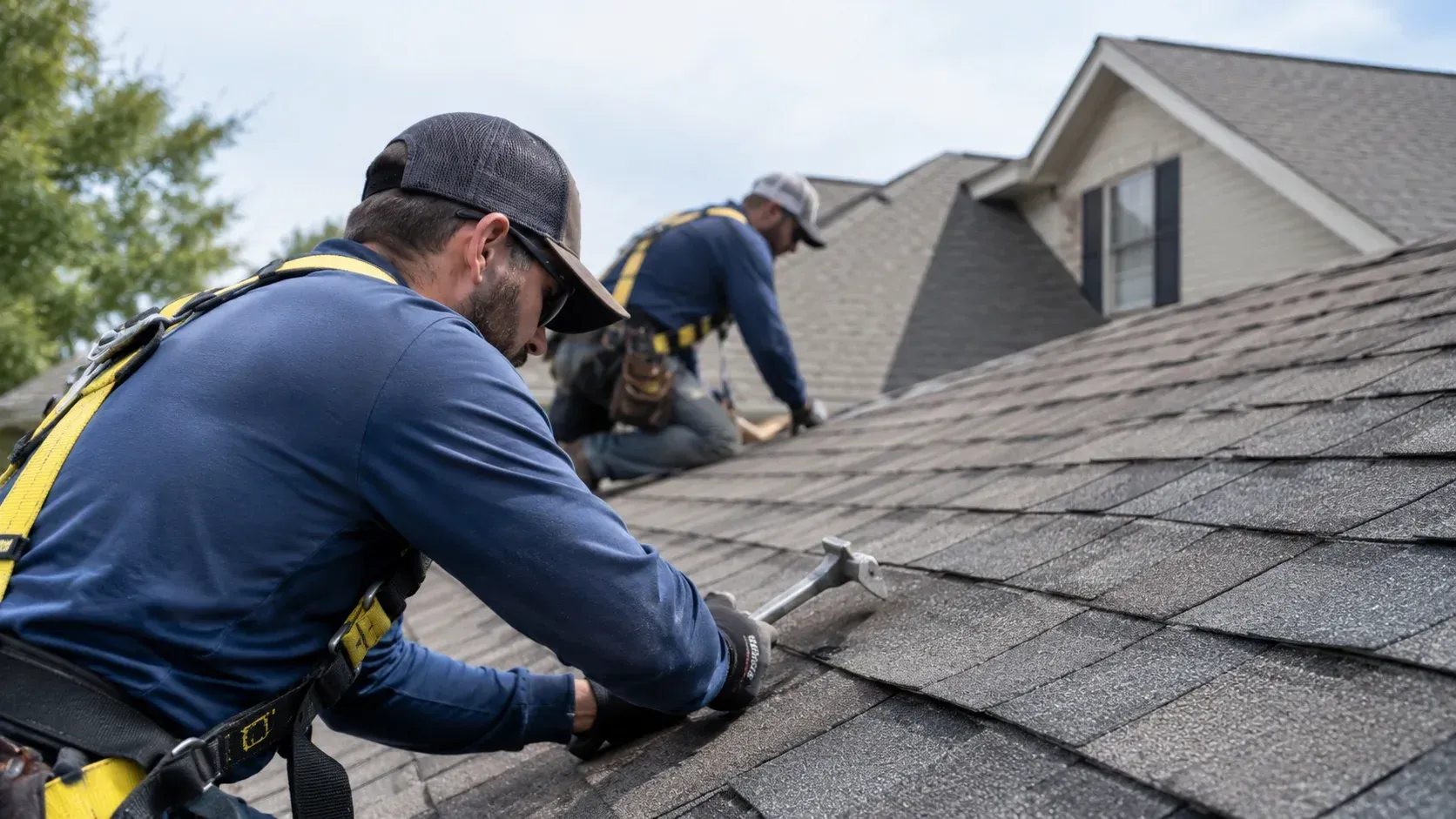
After severe weather events, like hailstorms or high winds, it's essential to inspect your roof. Storm damage can be extensive and often requires professional evaluation. Elevated Roofing and Construction can inspect your roof for damage and recommend whether repairs or a full replacement are needed.
10. Sunlight through Roof Boards
If you can see sunlight shining through your roof boards in the attic, it's a clear indication that your roof has holes or gaps. This type of damage allows in water and pests, necessitating an urgent replacement.
Act Now to Protect Your Home
If you've noticed any of these signs, it's crucial to contact a professional roofing company that can provide a thorough evaluation. Delaying roof replacement can lead to significant structural damage and costly repairs down the line. Elevated Roofing and Construction is here to assist you every step of the way, offering expert assessment and high-quality roof replacement services in Amarillo, TX, and surrounding areas.
Why Choose Elevated Roofing and Construction?
Our experienced team is dedicated to providing superior craftsmanship and exceptional customer service. We use only premium materials and advanced techniques to ensure your new roof stands the test of time. Plus, we work closely with your insurance company to make the process as seamless as possible.
Don't wait until a minor roofing issue becomes a major problem. Contact Elevated Roofing and Construction today to schedule your roof inspection. Visit our website at www.elevatedroofingtx.com or call us at (806) 738-4082. Let us help you protect your home with a reliable and beautiful new roof. Your dream roof is just a call away!
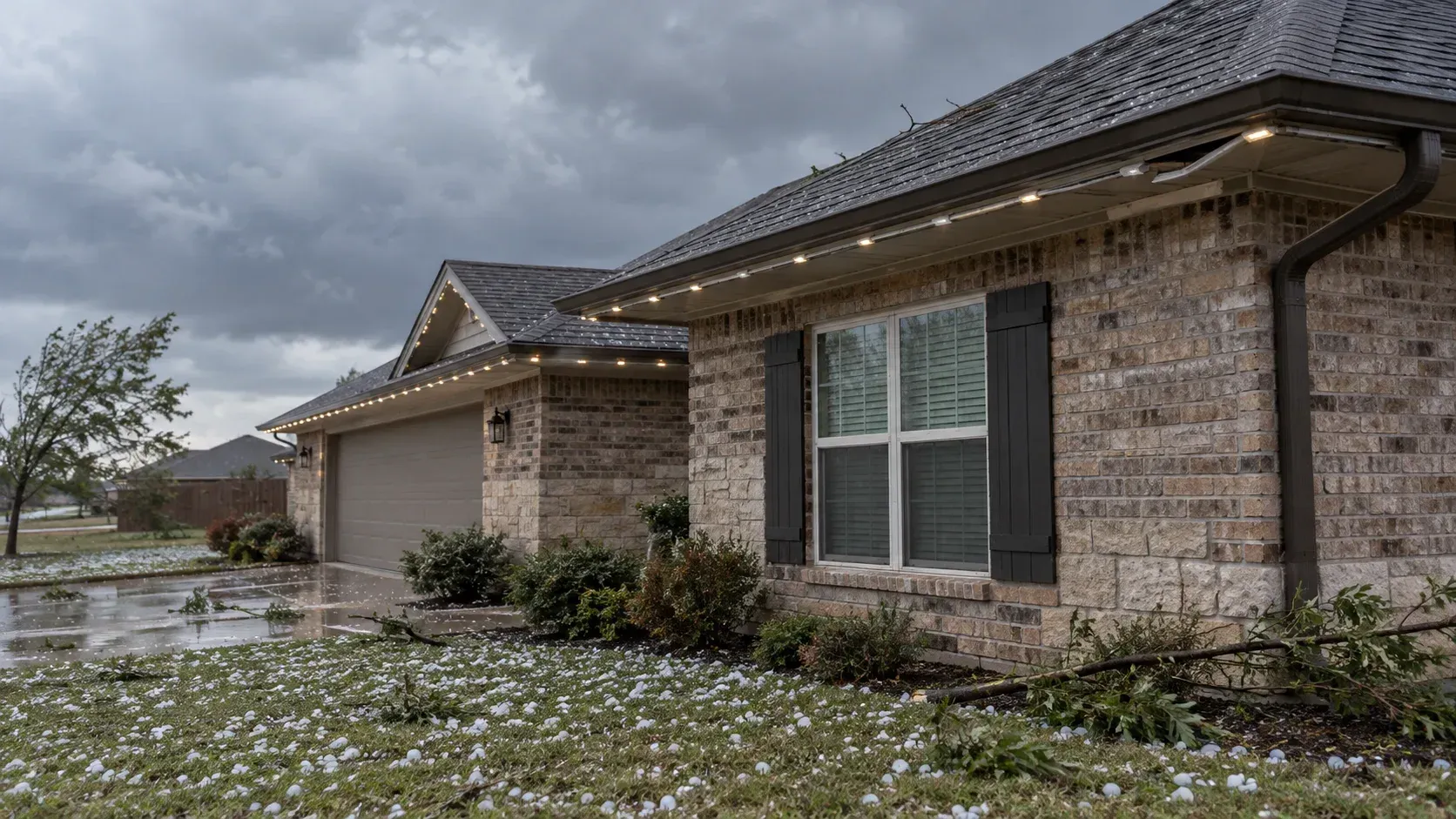
Table of Contents
- Direct Answer: How Permanent Lights Hold Up in Hail and High Wind
- What Hail Does to Permanent Lighting
- What High Wind Does to the System
- How Local Conditions Change the Risk
- Homes Versus Commercial Buildings
- A Hypothetical Scenario: Two Storms, Two Outcomes
- A Post-Storm Check Framework
- Common Misunderstandings About Storm Damage
- What Typical Online Advice Overlooks
- Risks, Limitations, and Unknowns
- Conclusion
- Questions About Permanent Lighting in Amarillo, TX
- Frequently Asked Questions
Key Takeaways
- A well-installed system often stays attached and working through ordinary storms, but severe hail and sustained high wind can crack track and lenses, loosen fasteners, and strain wiring.
- Most storm damage to permanent lighting happens in the track, brackets, connectors, and power supply, not in the individual LEDs.
- Hail can damage the roof under the lighting at the same time, so a lighting check and a roof check belong together.
- Damage is frequently invisible from the ground, which makes a close look after a major storm more reliable than a quick glance.
- Homes and commercial buildings face different exposure, because roof type, height, and edge details change how wind and hail interact with the system.
Introduction
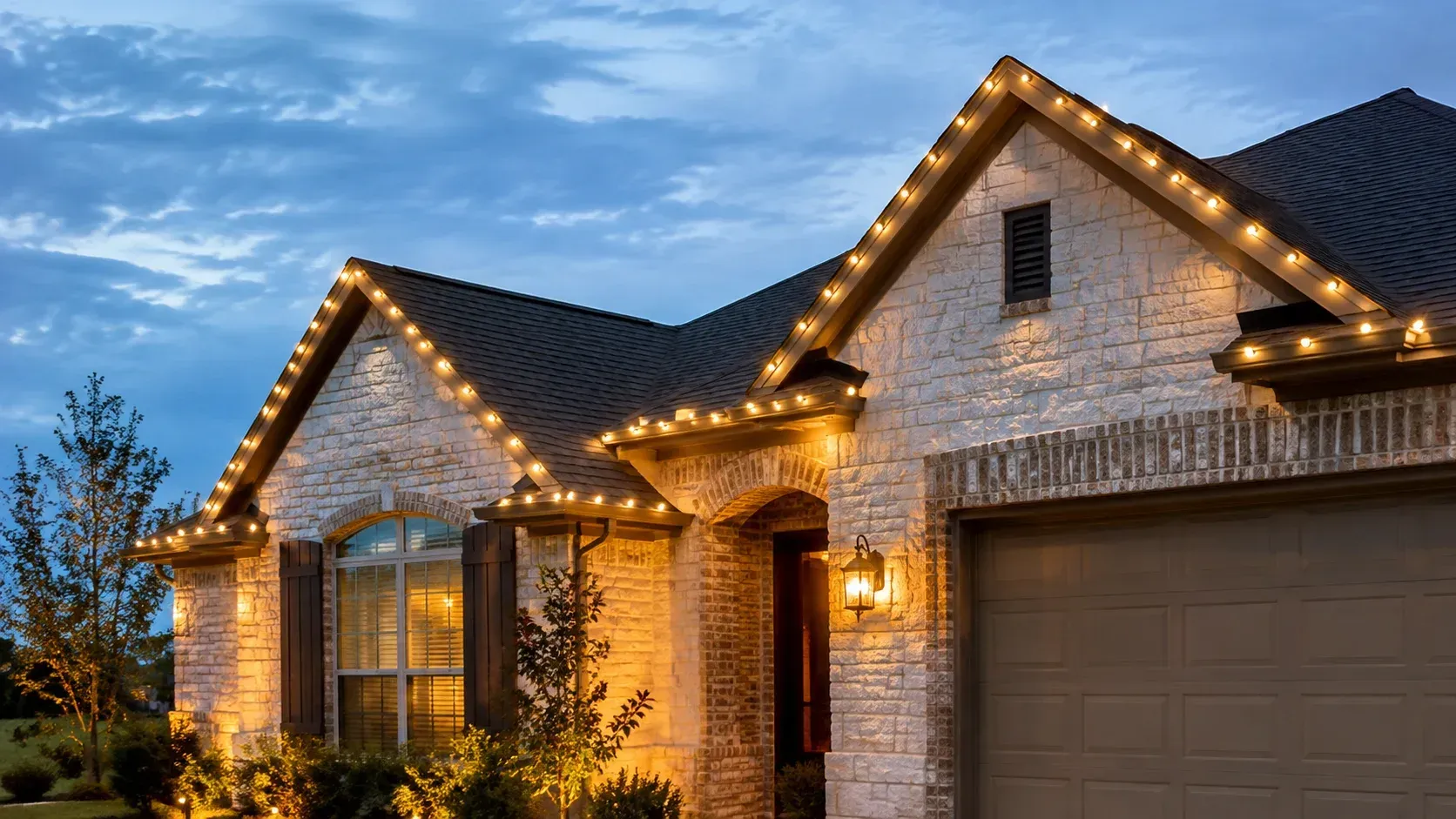
Permanent holiday lights generally survive an Amarillo hailstorm or high-wind event better than seasonal strands do, but they are not immune, and the damage that does occur is usually to the track, fasteners, and wiring rather than the LEDs. Permanent holiday lights are built to stay outdoors year-round, yet the Texas Panhandle tests that design with hail, sustained wind, and fast temperature swings.
This matters to both homeowners and business owners because the lighting sits at the roofline, the most exposed part of a building. A cracked track or a loose bracket does not always stop the lights from working, so a problem can sit unnoticed until the next storm makes it worse.
This guide explains what hail and high wind actually do to a permanent system, how risk differs between houses and commercial buildings, and how to check a system after severe weather.
Direct Answer: How Permanent Lights Hold Up in Hail and High Wind
Direct Answer: Quality permanent lighting is designed to withstand typical Panhandle weather, but severe hail can crack or dent the track and lenses, and strong wind can loosen fasteners, shift sections, and strain connectors. Whether a system is damaged depends on hail size, wind speed and direction, the mounting method, and the condition of the surface underneath.
The word "typical" carries real weight there. Holiday lights hail damage tends to show up first at the lens, the seams, and the mounting points. Hail near or above an inch in diameter is often cited as the range where damage to roofing and exterior fixtures becomes more likely, though results vary with wind-driven angle and the materials involved.
The honest answer is that no mounting method makes a roofline fixture hail proof. Good installation reduces the chance and severity of damage, and prompt inspection catches what does happen.
What Hail Does to Permanent Lighting
Impact on the light track and lenses
Permanent systems use a channel or track, often aluminum or a UV-stable polymer, with a lens or cover over the LEDs. Hail strikes can dent aluminum, crack polymer, and chip or fracture lenses. Small dents may be cosmetic. A cracked lens or split seam can let moisture reach the diodes and wiring.
Damage often follows the angle of the storm. If hail arrives with wind, one side of the building can take most of the impact while the other side looks untouched.
Impact on the roof surface underneath
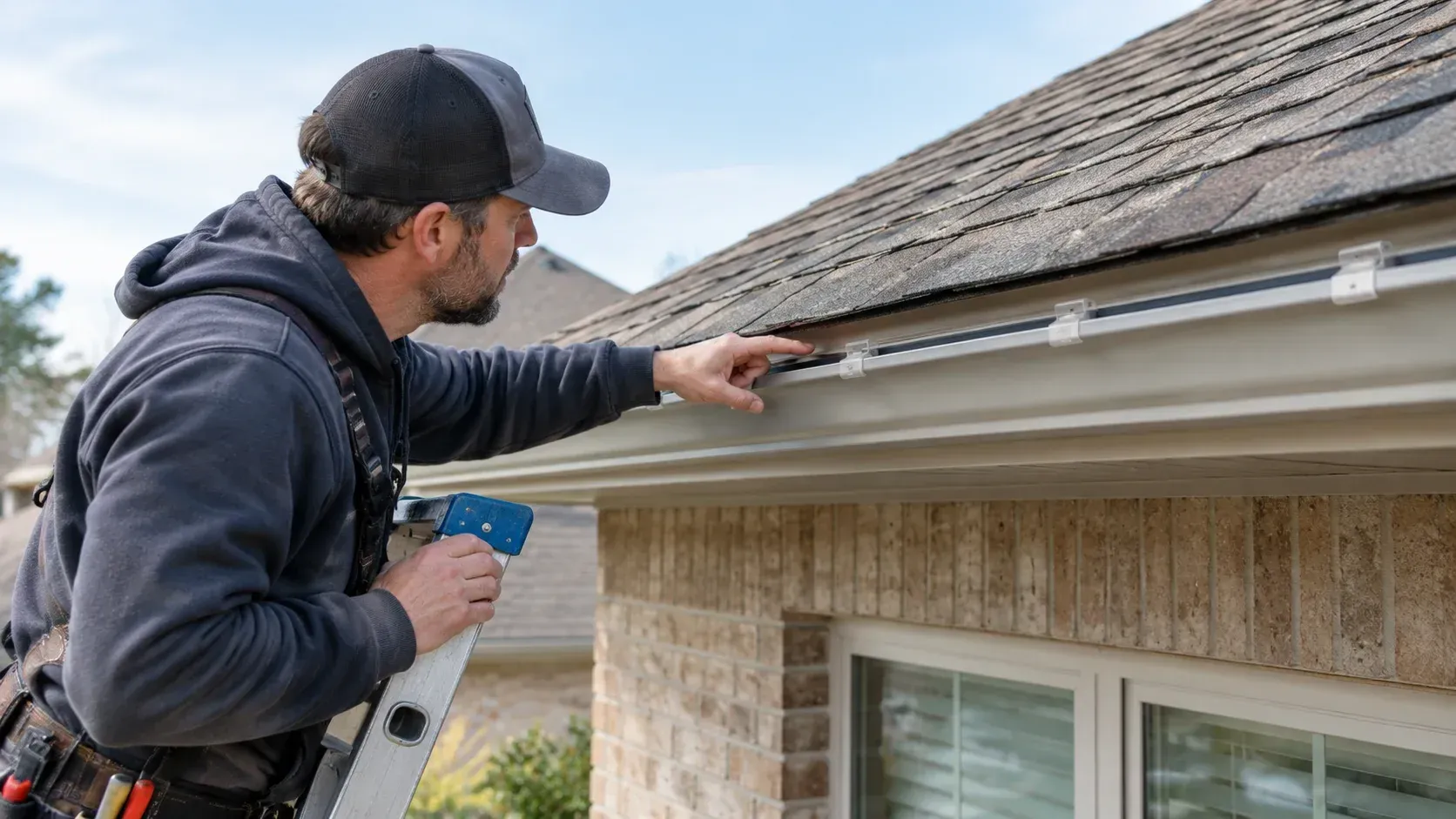
The lighting is attached to something, usually the fascia, soffit, or roof edge area. Hail that bruises shingles or damages edge components can weaken the very surface the mounting hardware depends on. If a storm hurts the roof, a roof repair assessment may be needed alongside any lighting fix, since a repaired light track on a compromised edge will not hold up well.
Why damage is not always visible from the ground
Cracks in a lens, hairline splits in a seam, and slightly displaced clips are easy to miss from the yard. Lights that still turn on can create a false sense that nothing happened. Damage often shows up later as a flickering section, a dead segment after rain, or a bracket that finally lets go in the next wind event.
What High Wind Does to the System
Fastener and bracket stress
Sustained wind pushes and pulls on a roofline fixture constantly. Over time, and especially during a strong gust event, fasteners can back out, brackets can bend, and track sections can lift at the ends. Corners and long unsupported runs tend to see the most stress.
A system anchored into sound material with corrosion-resistant hardware generally handles this better than one attached to aged or brittle material.
Wiring, connectors, and power supply
The wiring and connection points are often the weakest link. Wind can flex cables and pull at connectors, and a connection that was marginal to begin with may fail under repeated movement. The power supply or transformer also matters. If it is mounted in an exposed spot, wind-driven rain or debris can reach it.
Wind-driven debris
High wind turns branches, shingle fragments, and yard items into projectiles that can strike the track even when no hail fell.
How Local Conditions Change the Risk
Amarillo sits on the High Plains, where hail season generally runs from late spring through early summer and wind is a regular feature of the climate rather than an occasional event. For properties in the West McCormick Road area, the same storm patterns apply as in the rest of the city, and the National Weather Service office serving Amarillo is the right source for current warnings and storm reports.
What changes from one property to the next is local exposure. Building height, roofline shape, tree cover, neighboring structures, and how open the surrounding land is can all affect how wind and hail reach a given roofline. Two buildings a few blocks apart can experience a storm differently, so general local averages are less useful than a look at your own site.
Homes Versus Commercial Buildings
Residential rooflines
Houses typically have pitched roofs with eaves and fascia where the track is mounted. Hail tends to strike the exposed slopes and edges, and wind stress concentrates at eaves, gable ends, and corners.
Commercial buildings
Commercial structures often have flat or low-slope roofs, parapet walls, and signage or storefront lines that carry lighting. Taller buildings generally face stronger wind exposure at the roof edge.
For business owners, a lighting failure also has a visibility cost, since a damaged or partly dark display is noticeable to customers. That makes quick post-storm checks more worthwhile than the cosmetic damage alone would suggest.
A Hypothetical Scenario: Two Storms, Two Outcomes
This is an example, not a record of a real property.
Imagine a homeowner with a permanent system on a single-story house. A spring storm brings wind-driven hail for ten minutes. The lights come on that evening and look fine from the driveway. Weeks later, one section flickers after a rain.
A closer look shows a cracked lens on the west-facing run and a connector that took on moisture. Had the homeowner checked the track and connections right after the storm, the lens could have been replaced before water reached the wiring.
Now imagine the same storm on a house where the system was installed on a roof edge with aged fascia. Besides the lens damage, several brackets have pulled loose because the material behind them was already weak. The fix now involves the roof edge as well as the lighting.
The difference between the two outcomes comes from the surface underneath and how quickly someone looked, not from the lights themselves.
A Post-Storm Check Framework
After a significant hail or high-wind event, work through these in order, staying safely on the ground unless a trained professional is doing the inspection.
- Confirm safety first. Do not climb onto a wet or storm-damaged roof. Look for hanging sections or exposed wires from the ground.
- Look at the pattern. Note which side of the building took the storm. Damage usually concentrates there.
- Check for visible signs. Dents, cracked or missing lens sections, sagging track, and loose cable runs.
- Test the lights. Turn the system on at night. Dark segments, flickering, or color changes suggest wiring or connector problems.
- Document everything. Take dated photos and short videos before anything is moved or repaired.
- Schedule a close inspection. A professional roof inspection can look at the roof edge, fasteners, and lighting together.
| What to look at | What may indicate a problem | Who should check |
|---|---|---|
| Track and lenses | Dents, cracks, gaps, loose sections | Owner from ground, then professional |
| Roof edge and fascia | Bruised shingles, bent or loose edge material | Roofing professional |
| Wiring and connectors | Flickering, dead segments, moisture signs | Qualified installer or electrician |
| Power supply | Water intrusion, corrosion, tripped protection | Qualified installer or electrician |
Common Misunderstandings About Storm Damage
Common belief: If the lights still turn on, the system is fine. What is actually true: A working system can still have cracked lenses, loosened brackets, or compromised connectors that fail later. Why the distinction matters: Small problems found early are generally simpler to address than problems found after the next storm.
Common belief: LEDs are the part most likely to break in hail. What is actually true: The diodes are small and protected inside the track. The track, lens, fasteners, and wiring take most of the damage. Why the distinction matters: Looking only at the bulbs can miss the real problem.
Common belief: A system rated for outdoor use is rated for hailstorms. What is actually true: Outdoor ratings usually address moisture and UV exposure, not repeated impact from large hail. Why the distinction matters: Weatherproof and hail-resistant are different things, and the difference shows up in Panhandle storm seasons.
What Typical Online Advice Overlooks
Most articles treat permanent lighting as a stand-alone product. In practice, the lighting and the roof edge behave as one system, and storm damage often involves both.
Few guides discuss the sequence of repairs. If hail damages the roof edge, repairing the lights first can mean removing and reinstalling them later, which adds cost and handling risk to the track.
Online advice also rarely separates cosmetic from functional damage. A small dent may never matter, while a hairline crack at a seam can admit water. Telling them apart takes a close look, which is why a quick glance rarely settles the question.
Advice written for general audiences also tends to skip commercial exposure, such as flat roofs and customer-facing displays.
Risks, Limitations, and Unknowns
A few limits are worth stating plainly.
No installation can fully prevent hail damage, and the outcome in any storm depends on factors nobody controls, including hail size, wind angle, and storm duration. This article describes general patterns, not predictions for a specific property.
Insurance coverage for lighting damage can depend on the policy, how the lighting is classified, and the cause of loss. Owners should review their policy language and talk with their insurer before assuming anything is or is not covered.
Electrical work should be handled by qualified people. If wiring is exposed, water has entered a connection, or protection has tripped, treat the system as unsafe until it has been checked.
Conclusion
Permanent holiday lights are built for year-round outdoor use, and many systems handle ordinary Panhandle storms without trouble. Severe hail and strong wind are the exceptions that can crack lenses, loosen fasteners, strain connectors, and damage the roof edge the system depends on.
The most useful habit is a prompt, careful look after any major storm, covering the track, the wiring, and the surface underneath.
Questions About Permanent Lighting in Amarillo, TX
If a storm has left you unsure about your permanent lighting or the roof beneath it, a conversation with a local professional can help you decide what to check first. Elevated Roofing and Construction works with permanent lighting and roofing in the Amarillo area, and you can
contact us to talk through what you are seeing. This is general information to support an informed decision, not a guarantee of any outcome.
Frequently Asked Questions
Can hail damage permanent holiday lights?
Yes. Large hail can dent or crack the track and lenses and loosen mounting hardware. The LEDs themselves are usually protected inside the track, so check the housing, seams, and connectors first.
Can high wind pull permanent lights off a roof?
It can loosen fasteners, lift track ends, and strain wiring, especially at corners and long runs. Complete detachment is less common on sound, well-fastened installations, but it can happen.
How do I know if my lights were damaged in a storm?
Look for dents, cracked lenses, sagging track, and loose cables from the ground. Then run the lights at night and watch for flickering or dark sections, which can signal connector damage.
Should I inspect the roof as well as the lights?
Yes. Hail and wind can damage the roof edge the lighting attaches to. A combined check helps avoid repairing the lights on a surface that is also compromised.
Does homeowners or commercial insurance cover storm damage to permanent lighting?
It depends on the policy and how the lighting is classified. Review your policy and ask your insurer before assuming coverage, and keep dated photos of any damage.
Related Posts