Is It Safe to Leave Permanent LED Holiday Lights Running on Your Roof All Year in Texas Weather?
September 16, 2026
Your roof is one of the most vital components of your home, providing protection against the elements and contributing significantly to your property's curb appeal. However, like any part of your home, roofs don't last forever. Knowing the signs that indicate it's time for a roof replacement can save you from costly repairs or potential damage to your home. At Elevated Roofing and Construction in Amarillo, TX, we are your trusted partners in determining when a roof replacement is necessary. Below, we outline key indicators that it might be time to replace your roof.
1. Age of Your Roof
The longevity of a roof largely depends on the materials used. Asphalt shingle roofs typically last 20-25 years, while metal roofs can last longer. If your roof is nearing the end of its lifespan, it's wise to start considering a replacement. Proactively replacing an aging roof can prevent leaks and structural damage.
2. Frequent Repairs
If you're constantly calling for repairs, it might be more cost-effective to replace the entire roof. Ongoing repairs can add up and still leave you with an unreliable roofing system. Our team can help you weigh the cost of repairs versus a new roof to make the best decision for your home.
3. Visible Shingle Damage
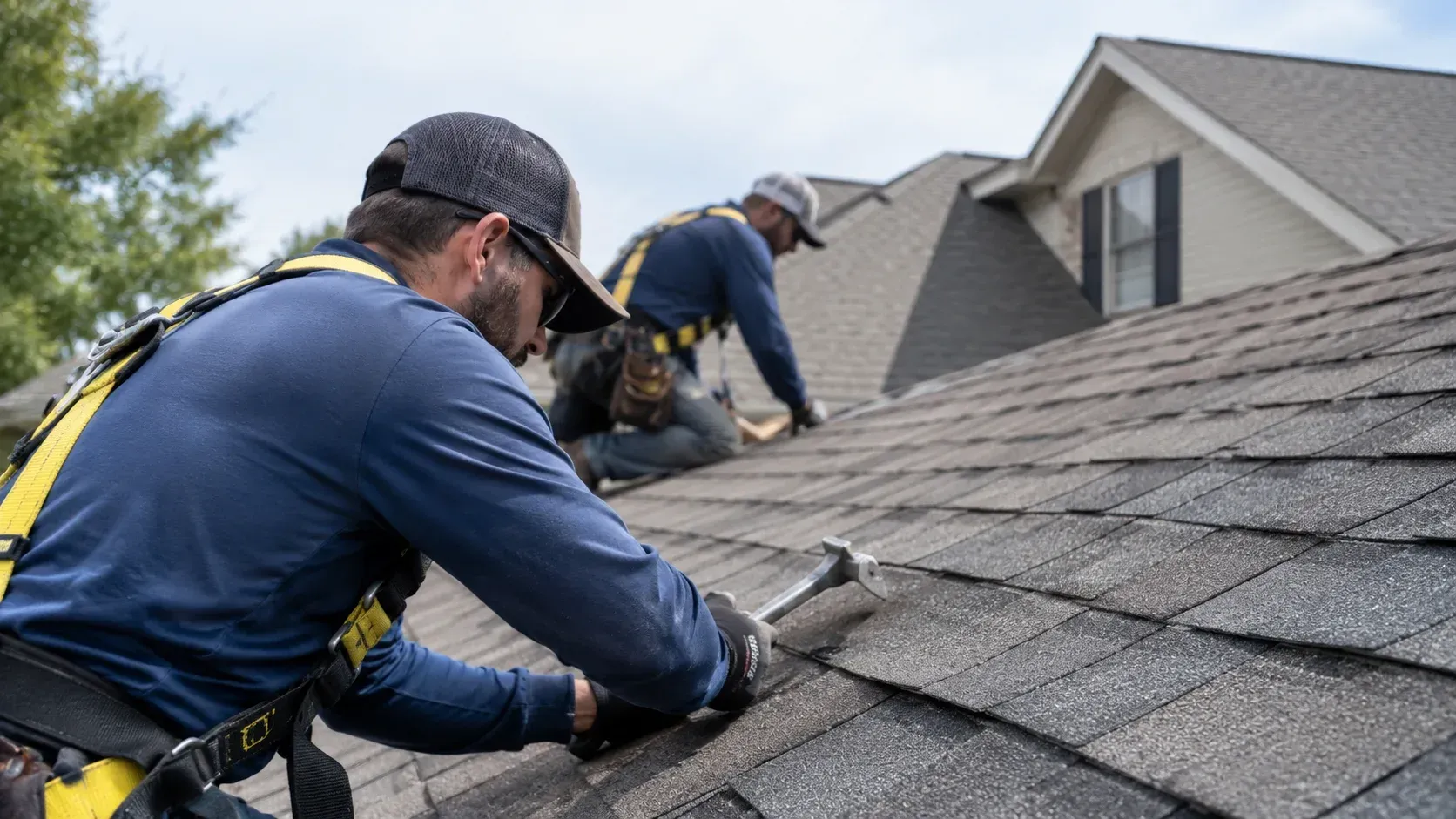
Inspect your roof periodically for signs of wear and tear. Look for shingles that are curled, cracked, or missing altogether. These are signs that your shingles have reached the end of their life cycle and are no longer providing the protection your home needs.
4. Roof Leaks and Water Damage
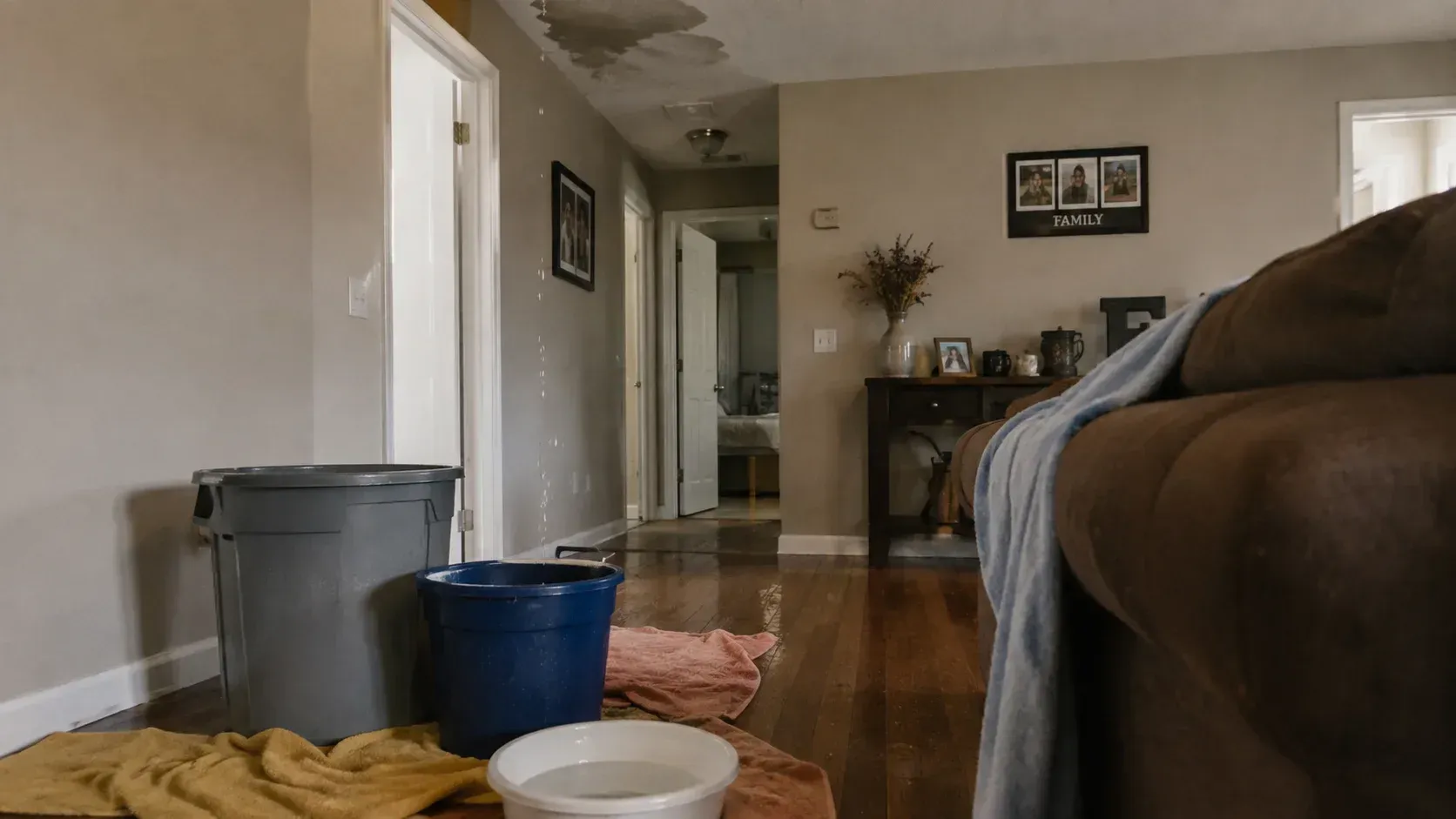
Water stains on ceilings or walls inside your home are clear indicators of a roof leak. If you've noticed water damage or signs of mold and mildew, it's critical to address the issue immediately to prevent further damage to your home’s interior.
5. Sagging Roof
A sagging roof is a serious issue that indicates structural problems. If you notice any part of your roof sagging, it's crucial to address it immediately to prevent further structural failure. This often requires a full roof replacement to ensure your home’s safety.
6. Granules in Gutters
As shingles age, they lose their granules, which often end up in your gutters. If you notice a significant amount of granules in your gutters, it could be a sign that your shingles are deteriorating and need replacing.
7. Increased Energy Bills
A well-insulated roof can help regulate your home's temperature. If you've noticed an unexplained increase in your energy bills, your roof might not be insulating effectively. This can often be mitigated by a new roof with better insulation properties.
8. Moss or Algae Growth
While moss and algae growth can sometimes be cleaned off, persistent growth might be a sign that moisture is being trapped in your roof, which can lead to structural damage. If moss and algae are constantly reappearing despite cleaning, a roof replacement might be necessary.
9. Storm Damage
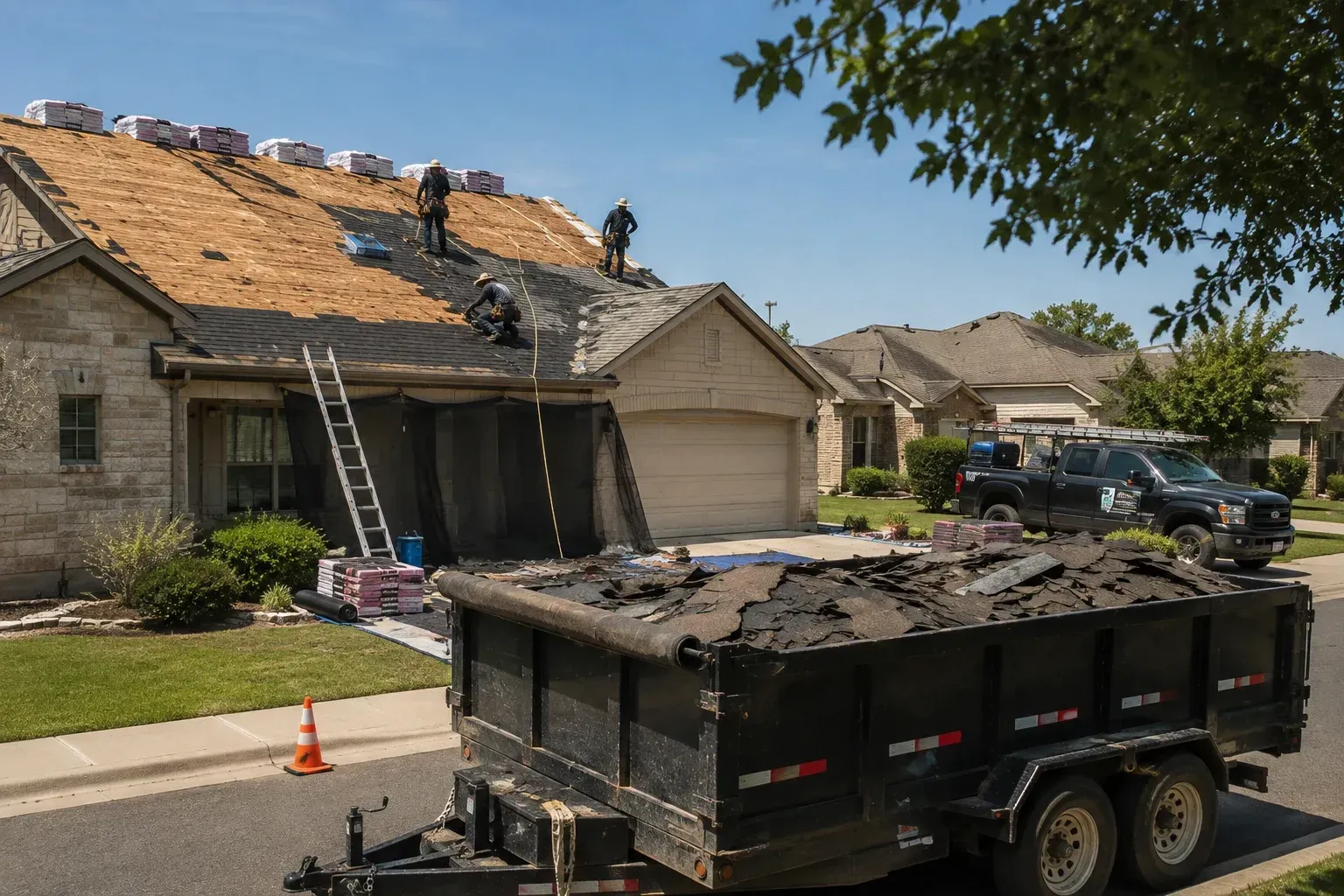
After severe weather events, like hailstorms or high winds, it's essential to inspect your roof. Storm damage can be extensive and often requires professional evaluation. Elevated Roofing and Construction can inspect your roof for damage and recommend whether repairs or a full replacement are needed.
10. Sunlight through Roof Boards
If you can see sunlight shining through your roof boards in the attic, it's a clear indication that your roof has holes or gaps. This type of damage allows in water and pests, necessitating an urgent replacement.
Act Now to Protect Your Home
If you've noticed any of these signs, it's crucial to contact a professional roofing company that can provide a thorough evaluation. Delaying roof replacement can lead to significant structural damage and costly repairs down the line. Elevated Roofing and Construction is here to assist you every step of the way, offering expert assessment and high-quality roof replacement services in Amarillo, TX, and surrounding areas.
Why Choose Elevated Roofing and Construction?
Our experienced team is dedicated to providing superior craftsmanship and exceptional customer service. We use only premium materials and advanced techniques to ensure your new roof stands the test of time. Plus, we work closely with your insurance company to make the process as seamless as possible.
Don't wait until a minor roofing issue becomes a major problem. Contact Elevated Roofing and Construction today to schedule your roof inspection. Visit our website at www.elevatedroofingtx.com or call us at (806) 738-4082. Let us help you protect your home with a reliable and beautiful new roof. Your dream roof is just a call away!
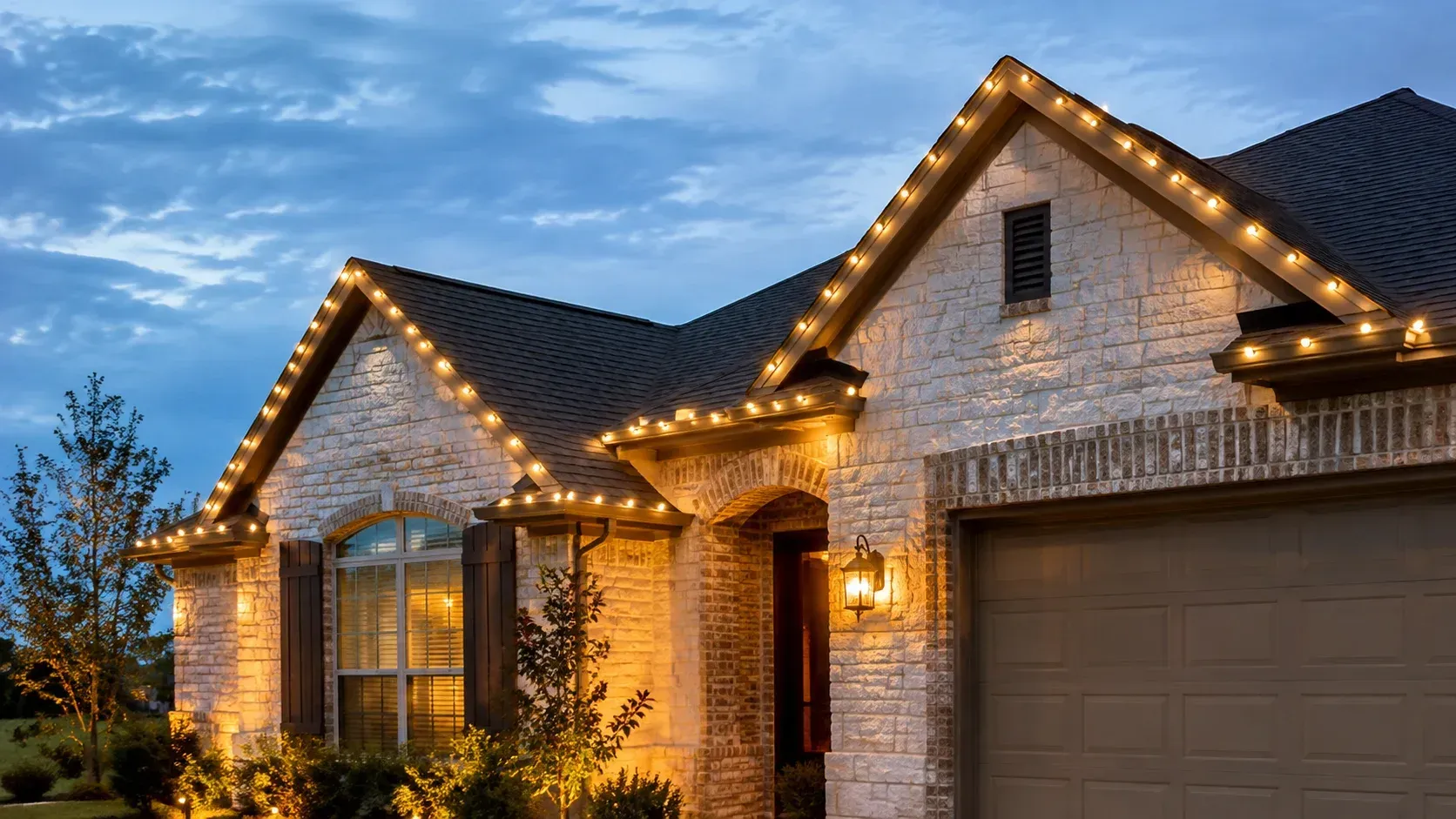
Table of Contents
- Why Permanent LED Holiday Lights Are Built Differently From Seasonal Strings
- What Texas Panhandle Weather Actually Does to Roofline Lighting
- Oelo and Govee Permanent Lighting Safety Depends on the Install, Not the Brand
- The Roofing Problem Nobody Warns You About
- Year-Round LED Roof Lights in Amarillo: What We Check and How Often
- Warning Signs Your Roofline Lighting Needs Attention
- Does Leaving LED Holiday Lights On Actually Cost Much?
- When We Would Tell You Not to Leave Them Running
- Conclusion
Key Takeaways
- Yes, it is safe. Permanent LED systems are designed for continuous outdoor exposure, which is the whole point of the category.
- The lights are almost never the failure point. Mounting hardware, sealed connections and fastener penetrations are what fail, and all three are install-quality questions.
- Because roofline lighting is fastened at the roof edge, a bad install is a roofing problem before it is a lighting problem. Water gets in through fasteners, not through diodes.
- Panhandle sun and wind are harder on these systems than winter cold is. UV degrades plastics and gaskets, and wind works fasteners loose over years.
- Inspect the system yearly, ideally alongside a roof inspection, and address a single dead section rather than waiting for a run to fail.
Introduction
Yes, it is safe to leave permanent LED holiday lights installed and running on your roof year-round in Texas weather. These systems are purpose-built for continuous outdoor exposure, unlike the seasonal strings you box up in January, and both of the brands we install are made to stay up permanently. What determines whether a year-round installation stays safe is not the lights themselves but the quality of the mounting and the electrical connections, plus periodic inspection of both.
That distinction is the useful part, and it is where our perspective differs from a lighting company's. We are roofers first, so our permanent holiday lighting installs get treated as work happening on a roof edge, which is exactly where a careless fastener causes an expensive problem three years later.
Here is what actually wears out, what Panhandle weather does to these systems, and what to look at each year.
Why Permanent LED Holiday Lights Are Built Differently From Seasonal Strings
The comparison people naturally make is to the string lights in the garage, and it is the wrong comparison. Seasonal decorative lights are designed to be up for six weeks and stored for forty-six. Permanent systems are designed the opposite way.
The practical differences that matter for year-round exposure:
- Sealed, encapsulated diodes rather than replaceable bulbs in open sockets. There is no socket for water to sit in.
- Fixed housings mounted in a channel or track along the roofline, rather than clips hung on a gutter lip.
- Purpose-made outdoor wiring and connectors intended to stay connected through weather rather than be unplugged each season.
- LED rather than incandescent, which means dramatically less heat at the fixture. Heat is what made old-style holiday lights a genuine fire concern.
- Designed for the sun. Permanent systems use materials selected to hold up under UV, which is the single most punishing thing about being outdoors in the Panhandle.
- Controlled through an app, so the system stays physically installed while you change colors, patterns or schedules, including turning it off entirely for most of the year.
That last point resolves a misunderstanding worth naming. "Permanent" describes the installation, not the operation. The fixtures stay up. Whether they are lit on a Tuesday in July is entirely your choice.
The products we install, Oelo and Govee, are both made for this kind of installation, and the site's own description of the work is accurate: high-quality materials designed to withstand the elements and provide long-lasting illumination.
What Texas Panhandle Weather Actually Does to Roofline Lighting
Homeowners usually ask about winter. Winter is not the problem here. Our climate is hard on roofline lighting in four specific ways, and only one of them is cold:
- Ultraviolet exposure. This is the big one. Intense, sustained high-plains sun degrades plastics, clouds lenses and hardens gaskets and seals over years. It affects cheap housings much faster than good ones.
- Heat. Summer surface temperatures on a roof edge run far above air temperature. Heat accelerates every material degradation process already underway.
- Wind. Sustained Panhandle wind and gusts work at fasteners and clips continuously. A mount that was firm on installation day can loosen over several years of that, and a loose mount is how a run starts sagging or pulls away.
- Hail. Direct impact can crack a housing or lens. Hail damage to lighting is usually obvious and localized rather than system-wide.
- Thermal cycling. Large day-to-night temperature swings expand and contract housings, wiring and sealants repeatedly. Over years, that cycling is what opens up a seal that was fine when new.
Notice what is missing from that list: the electronics. Sealed LED systems handle rain, snow and freezing temperatures without much drama. It is sun, wind and time that do the work.
Oelo and Govee Permanent Lighting Safety Depends on the Install, Not the Brand
We install two good product lines, and we would still tell you the brand is the less important half of the equation.
A quality fixture installed poorly fails faster than a lesser fixture installed properly, because everything that actually goes wrong with a year-round system happens at the interfaces:
- Where the fixture meets the mounting channel. A channel fastened to the wrong substrate, or fastened too sparsely for our wind, works loose.
- Where the channel meets the roof or fascia. Every fastener is a hole. Holes near a roof edge either get sealed correctly or they let water into the fascia, the decking and eventually the soffit.
- Where wires connect. Connections need to be made with outdoor-rated components and positioned so water drains away rather than pooling at the joint.
- Where the system meets your power. The connection to household power is electrical work, and it needs to be done properly, on a suitable circuit, with appropriate outdoor-rated protection.
For any specific product's electrical ratings, weather ratings or warranty terms, check the manufacturer's own documentation for the exact system you are getting. Those specifications vary by product line and change between generations, so we would rather point you to the manufacturer than paraphrase a spec sheet.
The Roofing Problem Nobody Warns You About
This is the part we care most about, and it is the reason a roofing company installing lighting is not an odd combination.
Permanent roofline lighting is fastened along the roof edge, at the fascia, drip edge or gutter line. That is one of the most water-sensitive areas of your entire roof assembly. It is where water is already being channeled and where flashing details matter most.
An installer who does not understand roofing can create real damage without ever touching a shingle:
- Fasteners driven through the drip edge or into the decking without proper sealing, giving water a direct path into the roof structure
- Screws into fascia that is already soft or rotted, which will not hold and which hides the deterioration
- Mounts installed over the shingle course rather than at the appropriate point, lifting or cracking shingles
- Channel fastened through flashing, compromising the detail that was protecting a vulnerable transition
- Gutter-mounted runs installed on gutters that were not attached well enough to carry the extra load and wind resistance
- Penetrations left unsealed because the installer thought of them as lighting holes rather than roof holes
None of that shows up as a lighting problem. It shows up as a water stain on a ceiling or soft fascia a few years later, and by then nobody connects it to the lights.
Two practical implications. If your roof is near the end of its life, install the lighting after the roof is replaced, not before, or you will pay to remove and reinstall the system. And if you are getting both done, having one contractor responsible for both means nobody gets to blame the other when a leak appears at the roof edge.
Year-Round LED Roof Lights in Amarillo: What We Check and How Often
For a permanently installed system, an annual look is enough in most cases, and the natural time to do it is alongside a roof inspection since the crew is already at the roofline. What we look at:
- Mount and channel security along the full run, checking for loosened fasteners, sagging sections and any separation from the substrate.
- Fastener penetrations and sealant condition, which is the roofing half of the inspection and the part most likely to matter.
- Connection points, looking for corrosion, moisture intrusion, loose fittings and any wire that has worked out of position.
- Wire runs, checking for UV-degraded insulation, chafing where a wire crosses an edge, and sections pulled taut or hanging loose.
- Housing and lens condition, noting cracking, clouding, impact damage and any water that has gotten inside a fixture.
- Dead or discolored sections, which usually point to a specific fixture or connection rather than a system-wide problem.
- The power connection and controller, confirming the enclosure is intact and sealed.
Our maintenance work covers regular inspections, bulb replacements, wiring checks and repairs as needed, which is the right cadence for a system meant to stay up for years.
After a significant hail or wind event, look sooner rather than waiting for the annual check. If the storm was hard enough to warrant a roof inspection, the lighting is right there.
Warning Signs Your Roofline Lighting Needs Attention
Call somebody if you notice any of these:
- A section that has gone dark, or colors that no longer match across a run
- Visible sagging, or a length that has pulled away from the roofline
- Flickering, especially if it worsens in wet weather
- Any breaker that trips when the system is on
- Discoloration, scorching or melting anywhere near a connection
- Water visible inside a housing or lens
- Cracked housings after hail
- Exposed wire, or insulation that looks chalky and brittle
- Staining on the fascia or soffit below a mounting run, which is a roofing symptom rather than a lighting one
The flickering and breaker items are the ones to act on immediately. Everything else can wait for a scheduled visit, but a dead section is worth fixing while it is still one section.
Does Leaving LED Holiday Lights On Actually Cost Much?
LED lighting draws substantially less power than the incandescent holiday lighting most people are comparing it against, which is why the energy question rarely turns out to be the deciding factor. We are not going to put a dollar figure on your bill, because the honest answer depends on how long a run you have, how many hours a day you run it, what patterns you use and what you pay per kilowatt hour.
If the cost matters to you, two things help more than choosing between brands. Use the app to run the system on a schedule rather than dusk to dawn, and use lower-intensity settings for everyday ambient lighting rather than the full-brightness display settings you would use in December. For an exact number, check the manufacturer's stated power draw for your specific system against your own electricity rate.
When We Would Tell You Not to Leave Them Running
A few situations where we would suggest something other than leaving the system energized year-round:
- Any of the electrical warning signs above. Turn it off and get it looked at rather than running it while you wait.
- Visible physical damage after a storm, particularly a cracked housing that may have let water in.
- A roof replacement is coming up. The system will need to come off, so plan the sequence rather than reinstalling twice.
- Fascia or soffit deterioration at the mounting line. Fix the substrate first, because a mount is only as good as what it is fastened to.
- An unknown or undocumented install you inherited with the house. Get it inspected before assuming it was done correctly.
None of those are reasons to avoid a permanent system. They are reasons to have somebody look at a specific one.
Conclusion
Permanent LED holiday lights are safe to leave up and running through Texas weather year-round, because that is precisely what they were engineered for. The risk in a year-round installation lives in the mounting hardware, the sealed connections and the fastener penetrations at your roof edge, and every one of those is a function of how the system was installed rather than what it cost.
Treat the lighting as part of your roof rather than as a decoration attached to it. Have it looked at once a year alongside a roof inspection, deal with a dead section while it is still one section, and make sure whoever puts it up understands that every fastener at a roof edge is a hole in your roof.
Schedule a Permanent Lighting Consultation
If you are considering permanent roofline lighting, or you have an existing system you would like checked, we can walk your roofline with you and review the mounting and electrical details before anything gets fastened.
Elevated Roofing and Construction is fully licensed, bonded and insured, with over 20 years of combined experience on Panhandle roofs. We install Oelo and Govee systems, design the layout around your specific roofline, and handle the roofing side of the installation properly because that is our primary trade. We also provide ongoing maintenance including inspections, replacements, wiring checks and repairs.
We serve Amarillo, Borger, Canyon, Dalhart, Dumas, Pampa, Bushland and Plainview. Call
(806) 738-4082 or reach us through the contact page. Recent installs are in our
gallery, and you can read customer feedback in our
reviews.
Frequently Asked Questions
Do permanent roof lights have to stay on all the time?
No. "Permanent" refers to the installation, not the operation. The fixtures stay mounted year-round while you control color, brightness, patterns and schedules through an app, including turning the system off completely for most of the year.
Will installing permanent lighting void my roof warranty?
It depends on your specific manufacturer and workmanship warranties, since both can have terms about penetrations and third-party work at the roofline. Check your warranty documents before installation, and have the work done by a roofing contractor who understands what those terms require.
Can permanent LED lights be installed on a metal roof?
Generally yes, though mounting details differ substantially from shingle roofs and fastener placement matters even more. This is worth discussing on site rather than in general terms, because the right approach depends on the panel profile and edge detail.
How long do permanent LED holiday light systems last?
Manufacturers publish expected service life for their own products, so check the documentation for the system you are considering. In practice, mounting hardware and connections usually need attention before the diodes do, which is why annual inspection matters more than the rated lifespan.
Should I replace my roof before or after installing permanent lighting?
Before. A roof replacement requires removing and reinstalling the lighting, so if your roof is within a few years of the end of its life, sequence the roof first and save yourself paying for the lighting work twice.
Related Posts